The older I get, the less I seek resolution and the more I seek to live sustainably with the tension.
There are many examples of this in my life. My neighbor, a wonderful man of 68 years, passed away suddenly earlier this week. On the one hand, it is so unfair. He was fit, energetic, kind, fun, and - having just retired - ready for more adventures with his friends and family. But on the other hand, he lived life very fully and had a lot of great years and experiences. On the one hand I am angry, feeling that he and his family were short-changed. But on the other hand, his 68 years were wonderful. My father passed away at a much younger age, when he was 55. He didn’t get to meet his grandchildren. That is unfair. But others have passed away after only 30 years of life. 15 years of life. A month of life.
As opposed to my younger thinking, I no longer think there is a clear resolution to be found here. I can be angry and grateful at the same time. That is OK. Perhaps even good.
There are other questions in life that don’t have clear resolutions. My Sunday morning discussion group has dealt with the question “How much is too much?” in regards to possessions and wealth. (Ha, this makes us sound like we are all rich - a relative term, I suppose). When do possessions and financial wealth work for owners and society? When do they perpetuate injustice towards neighbors and isolate those who have them? Is there a certain line, contextual to a culture, where this difference becomes apparent? I don’t know for sure.
I can’t have resolution on this. And perhaps this is good. Living with this tension may help me maintain awareness towards myself and others. I can’t find a perfect solution, but I can be open to my role in injustice, while also living life.
If I ignored the tension, then I would be living a fantasy, decreasing the depth of my life by isolating myself. If I found some “solution”, then perhaps I would also stop thinking about economic injustice, thinking I had resolved the issue. Rather, I think this tension requires tending - frequent check-ins concerning balance and how we and our neighbors are doing.
None of this is to suggest that we shouldn’t seek conflict resolution when possible. Some conflicts may be resolved and moved firmly into the past. But others are never going to be completely fixed and forgotten. And again, perhaps that can be a good thing if our goal is to increase awareness. I suppose I see “resolution” more as creating a life where the conflict can fit into my days without dominating them. Too much resolution seeking could lead me to distraction from life.
I have read that in Hindu thinking, the goal is not to overcome emotion. Rather the goal is to nurture an underlying flow of serenity that acts as a baseline during our emotional experiences. In other words, don’t look to rid yourself of anger or sadness. Experience them fully, but seek to live with them as partners - to walk the razor’s edge of salvation, where an underlying, even sneaky, serenity may help you navigate your experiences. Tend the serenity. Relax the tightness in your chest. Breathe. Live with the tension through awareness, not through stress.
As the book title says - “Wherever you go, there you are.” In this life, we’ll never be conflict free. So live with the tension.
Friday, November 13, 2015

Thursday, May 7, 2015
Concert May 14!
I am very, very excited about the Edmond North High School Orchestra concert May 14, 2015 at 7:00PM!
The Symphony Orchestra will be performing my piece Wovensong No. 1 “An Arduous Path”. Edmond North has four orchestras, and I am telling you, this group sounds like a university orchestra - easily!
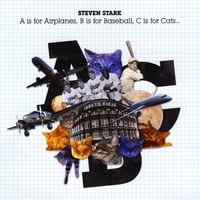
Another one of their excellent ensembles will join me in a performance of my song “Lazarus” which is featured on my 2008 album “A is for Airplanes, B is for Baseball, C is for Cats...” I wrote an arrangement for the string players, and I can’t wait to play with them.
Another one of their excellent ensembles will join me in a performance of my song “Lazarus” which is featured on my 2008 album “A is for Airplanes, B is for Baseball, C is for Cats...” I wrote an arrangement for the string players, and I can’t wait to play with them.
I am pasting the program notes below. I hope to see some of you there! For those who cannot attend, I hope we will have some audio/video to post as well.
The concert is at the Edmond North High School auditorium and begins at 7:00PM. I should also mention that the performance is under the direction of orchestra wizard Peter Markes, Oklahoma's 2013-2014 Teacher of the Year, with bass extraordinaire Jeff Ketch.
Wovensong No. 1 “An Arduous Path” Program Notes
Weaving is a way of producing fabric by interlacing two distinct materials. The longitudinal threads are called the warp, and the lateral threads are called the weft. A Wovensong is a form featuring two distinct melodic ideas which are woven together in different ways as the piece progresses. The form is not unlike a Sonata-Allegro form (the traditional first movement of a symphony), but the structure of the Wovensong is more centered on melodic material than key relationship. In fact, it is desirable in a Wovensong to end the piece in a different key from the beginning to signify variation and linear progression. Recognition is brought about by the repetition and development of familiar melodies. The use of the word “song” in the form title also signifies a focus on melodic material.
“Wovensong: An Arduous Path” begins with a soft Introduction followed by a pointed, minor-key theme (the Warp) presented in unison by all the strings. After a period of development, a major-key, lilting theme (the Weft) takes over. The Weave section features material from the Introduction, the Weft, and the Warp; beginning in a reflective mood and then spinning out aggressively towards the end.
Lazarus Program Notes
The lyrics to “Lazarus” describe three miracles from three different religious traditions (I have often thought that I should have named this song “Three Miracles”!). The first is the Buddhist miracle of the discovery of the 14th Dalai Lama, who is said, among other things, to have pointed towards the city of Lhasa, the traditional home of the Dalai Lama, as a very young child and announced that he would be going there soon.
The second miracle is from the Daoist tradition. A carver wants to make a bell stand out of wood. Rather than carving one himself, he walks through the forest and eventually finds one that nature has already created.
The third miracle is the story of Lazarus, from the Christian tradition, who is said to have been raised from the dead by Jesus.
I realize that it took longer to read these notes than it would to read the lyrics of the song!
The music goes back and forth between the keys of G Major and E Major to create variation, while the melody only changes subtly. The arrangement for the Chamber Orchestra was great fun to write - I could not be more excited to perform with them!
Wednesday, February 18, 2015
Love and Hate
I have played many, many weddings over the years (I really enjoy it). A universal theme in the officiators' comments has been that love is not just an emotion, it is an action.
Sometime I wonder - can hate work the same way? It is an open question in my mind.
I realize that many who oppose same-sex marriage probably feel that they are trying to help same-sex families get away from a lifestyle that violates "God's laws". However surely they must see that from the other side, their actions are hateful, because same-sex families are being asked to give up their intimate relationships on the basis of someone's personal religious doctrine that does not correspond to a wider science-based, ethics-based reasoning.
In short, bills aimed at prohibiting same-sex marriage (like HB 1599 and 1125 proposed in Oklahoma) make life harder for many families out there. Can "hate" be an action, even if it does not correlate with a feeling of hatred?
Sunday, May 4, 2014
Summit Middle School Orchestra To Premiere “The Swashbuckling Suite.”
This Friday, May 9 the Summit Middle School Orchestra under the direction of Angie Allen will debut a new string piece by Oklahoma City composer Steven Stark. The title of the work is “The Swashbuckling Suite”. The students will be playing several movements from the work including “The Sea of Adventure” and “Parry and Thrust.”
“The work is pirate-themed and is actually still ‘under construction’. I am still working on the final movement, but we decided it would be a rewarding experience to go ahead and play a few of the movements this year,” said Stark. “I could not be more excited to work with Angie and the excellent students at Summit. Hearing them play this piece is about as fun as it gets!”
"Because it is more modern music, I think it is more interesting,” said Mei Zhang, an 8th grade violinist at Summit. “Since the composer is alive, we can really portray what he wants us to."
"Because we are going to be the first ones to play the music, it is going to be a very rare experience. Most people don't get to do that, “ said 8th grade cello player, Jessica Fan.
"Steven has written an exciting and beautiful piece, and the students have really enjoyed learning this music,” said Allen. “It has been both a challenging and rewarding experience."
Steven Stark lives and works in Oklahoma City. He has written many pieces for middle school and high school string orchestras. He also recently composed the score to the documentary “Where Did the Horny Toad Go?” As a cellist and guitarist he has toured with the Starlight Mints and the Lovely Sparrows. As a session musician he has played on recordings by Graham Colton, Avril Lavigne, David Hodges, Student Film, Tyson Meade, Bronze Radio Return and many others. He was a member of the seminal OKC rock band The Fellowship Students, and has released several solo albums. He can be contacted at www.stevenstarkmusic.com.
The concert is at the Santa Fe High School auditorium and will begin at 7:00PM. In addition to the premiere, the 6th, 7th and 8th grade orchestras will play works by J.S. Bach, Mark Williams and Soon Hee Newbold among others.
Tuesday, April 1, 2014
A New Job this First Day of April!
I am pleased to announce that I have accepted a position as Government Liaison for the Christian Science church! My first step is to organize a lawsuit against the federal government for requiring the health insurance offered by Christian Scientist-owned businesses to cover doctors. Private business owners who are members of the church are happy to provide insurance which covers prayer treatments, but doctors violate their beliefs.
I am also doing a little part-time work for some Jehovah's Witness business owners. They want to offer their employees insurance that does not cover blood transfusions. Medical treatment is OK, but remember that we should all "abstain from blood" as prescribed by Acts 15.
I know that all business owners could simply opt out of providing coverage and instead pay a fee which is smaller than current insurance costs, and I realize that no person is ever being required to make use of a medical service (the government is just trying to make sure the option is available in their coverage) but this is a question of religious liberty folks!
After we wrap up these cases, I hope to start my own lobbying firm. We hope to introduce a new Line Item Taxation Amendment which will allow all Americans to simply choose which programs their tax dollars will fund. Who needs compromise in the legislative process? Who even needs a democratic republic anymore? Let's do it directly. Don't agree with paying for a road, a military plane or environmental regulations? Then opt out!
Our next project is the Line Item Law Amendment which will allow citizens to only follow the laws which they want to follow. There are people arrested for drunk driving every day who don't think there is anything wrong with it! Why should they have to obey a law with which they disagree?
Working together as a community to create civilization should never even hint at stepping on the toes of whatever an individual feels like doing at any given moment. Let's work together to make this happen!
If you feel like it!
Wednesday, December 11, 2013
The Bible Geek

My favorite podcast for several years has been “The Bible Geek” with host Robert M. Price. A New Testament scholar, former evangelical pastor, and current atheist, Bob Price has a great love and respect for theologies, religions and myths (including comic books, of course!).
He has little patience with “axe-grinding apologetics”, but he also has great friendships with apologists which creates an atmosphere where relationship is valued over polemics - although Bob will certainly tell you what he thinks about an issue!
He is also a master of accents, reading questions from listeners in the accent of their choice. He usually reads Scripture in the voice of Charlton Heston, unless Jesus is speaking, then it is Willem Defoe. And the apostle Paul is Paul Lind (Bewitched).
All in all, it is a fascinating podcast if you like such things.
I got a bit of a thrill when he recently addressed some of my questions. If anyone is interested, I will paste the questions below. Happy listening! Or not listening! :)
These questions are addressed at the beginning of the Dec. 5 2013 podcast. I am particularly impressed by his response to the first question. There is a lot for me to explore in there.
Hi Bob!
1. My chosen myth is that of a pantheist, or panentheist, God. God is all that is (including myself and the Bible Geek!). And even if there is a stand-alone person of God in the mix, creation must reflect God's thought and intention, and therefore that creation should be considered part of God, just as our thoughts and intentions are a big part of who we are.
Is there any history of this type of thought within the Judeo-Christian tradition?
2. It seems to me that the problem people have with determinism, whether theistic or naturalistic, is that they assume there is a separate "I" being played like a marionette. However there is no separate "I." We are not controlled by naturalistic factors - we ARE those naturalistic factors. The alternative is that we are disconnected from the phenomena around us. It seems to me the same is true if one believes in theistic determinism. God is not pulling our strings to achieve His intention - rather we ARE God's intention.
I suppose I agree with the Calvinists a bit on this one. Too bad they mix up God and the devil!
I would be interested in your thoughts on freewill within this context. Is there an "I" that is separate from naturalistic phenomena or from God's intention? The idea seems incoherent to me.
Thanks so much for your incredibly valuable insight. I am in the car a lot teaching music lessons and playing gigs, and I always enjoy the Bible Geek!
These questions are addressed in the middle of the Dec. 7 podcast. I was glad to hear him generally agree with me on the first, as the meaning of “turn the other cheek” has come to mean “ignore” instead of what it actually means - “OFFER the other cheek.” The 2nd question was not addressed directly, but he offered interesting thoughts anyways. The 3rd question response was interesting, but I think it may show a bit of a weak link in Mr. Price’s Christ Myth Theory. However I am still very interested in the theory, and it is quite possibly correct. Who knows?
Greetings to the garrulous Geek who knows his Greek!
I have a few questions for you, sir.
1. I have been listening to some episodes of The Bible Geek over the last year and the subject of "turning the other cheek" has come up a few times. Your view seems to be that the best interpretation of that passage is that it is a rejection of a retributive honor system. While this makes some sense for sure, particularly since it is a direct challenge to "an eye for an eye" in the context of the Sermon on the Mount, I wonder if there is more to it than that.
The passage does not say simply to walk away. Rather it says to offer the striker the other cheek as well. This seems to go a bit further than rejecting retaliation for the offense. To me, it seems to imply a non-violent power play, where the struck takes back control from the striker - as in "You may have hit me, but I am the one calling the shots. Here, hit my other cheek as well."
Doesn't this seem close to the kind of non-violent resistance we saw from Ghandi in the 20th century? It seems an act of taking back power for the powerless by shaming the conscience of the offender.
What sayeth the Geek?
2. I join the Geek in criticizing the Penal Substitution Theory as fundamentally unjust. How does punishing an innocent for the crime of another satisfy justice in any coherent way? The sins of humanity are not presented by Paul as being akin to a parking violation, where another might pay a measly fine in our stead. Rather the author of Romans sees the sins of humanity as a capital offense - "the wages of sin is death".
Killing an innocent in a guilty person's place makes no sense according to any civilized justice system. Or, to put it in a way we have all heard many times, two wrongs do not make a right.
However, I am wondering if the "substitution" idea can still be moral if we remove the "penal" from in front of it?
The version I will offer here is still one of substitutionary atonement. It maintains that Christ still takes the place of sinners in a sense. But it removes the "penal" part, which is the idea that Christ's sacrifice was to appease God.
Christ submitted himself to death at the hands of sinners. He showed us the wages of our sin by taking them on himself, for sinfulness responds to love in violent ways. Contemplating the death of Christ at the hands of men, who represent the imperfections we all have, convicts our hearts. This leads us to turn from the destructive ways of sin. Therefore Christ has substituted himself for us, showing and bearing the consequences of our sin and convicting our hearts in order to lead us to the more beneficial path of right action. And of course, this right action, leads us to "at-one-ment" with God.
Christ dies for our sins, because of our sinfulness. But not because God needed to be appeased, but rather because there is a natural suffering that comes about when we do not know love.
This interpretation is one along the lines of Ghandi's hunger strikes. By taking this physical burden on himself to protest potential combat between Muslims and Hindus, he convicted the hearts of both sides and, at least for a while, led them to avoid conflict. His was a substitutionary atonement.
Is there a history of this view of atonement in Christianity?
3. Finally, I am getting more and more familiar with the Christ Myth Theory. While I still don't see it as the most likely candidate for describing the "historical" Jesus, the Geek has certainly succeeded in convincing me that it is a possibility to be taken seriously.
My question is this - according to the CM Theory, what would have been the catalyst for the formation of the early church? It makes sense that if there was a person named Jesus, and he was crucified, and his followers believed him to have been raised by God, then this would have led to a reinterpretation of Jesus' past role on earth, a development of a heightened Christology over time, and the formation of a new religion.
If the Christ idea came about from a combination of Gnosticism, other mystery religions, and the notion of Yahweh as a dying and rising God - what was the spark which brought it all together into what would become Christianity?
I love your show. Thanks for the education and the entertainment, friend!
Thursday, October 31, 2013
Ancient of Autumn Days

by Steven Stark and dedicated to G.A. Compton
The singed embers of the pear tree flicker red as Rahab's rope.
Yet no trumpets, but whispering winds (no less mighty), announce this great fall.
The sweetgum sage waves his wand, weaving wisdom into colored stars.
Yet the Magi must travel, and Diogenes must set down his cloak.
The youthful maple, like young Achilles in the lust of battle, is mortally wounded.
But he laughs and holds high his banner stained with sunset blood.
The pistache contemplates her colors, golden orange and scarlet spice, knowing that the Queen of Sheba in all her glory was not arrayed as one of these.
The stoic elm fades, resigning his kind, quiet shade with one last gift -
-the graceful flaxen fall of his summer substitution, when Apollo was appeased and our frail faces were cooled.
The great-hearted ash is weeping honeyed tears.
And a heart burns, crimson and contrite, as the wrinkles fall deeper around autumn eyes.
Subscribe to:
Posts (Atom)