This week, I was very happy to learn that "Where Did The Horny Toad Go?" will premiere this April at the Arizona International Film Festival in Tucson!
Several scenes are shot on location there, so it is a fitting place for a first official screening.
Wednesday, March 14, 2012

Sunday, March 4, 2012
"Where Did The Horny Toad Go?" - Pick Your Price! (almost)

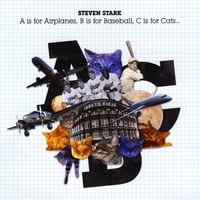
I am very, very pleased to announce the release of the album version of "Where Did The Horny Toad Go?"! The album is now available on iTunes and is in the process of being distributed to several other online merchants as well.
However! For a limited time - a week or so - I have decided to sell the album myself and to allow you to pay what you want. The only condition is that you must pay at least two dollars. Of course if you would like to pay more, then that is greatly, greatly appreciated, but if times are tight, and $10 seems a lot, then believe me, I would much rather you listen to the album for two dollars, than not hear it at all! (I wanted to make the minimum $1, but paypal charges a minimum of $.32 a transaction!)
I am also hoping that if I offer the album this way, some people might just take a chance on some new music. So pay what you feel you can right now, don't be embarrassed, and know that I really want you to have the album! I know how it is to like music, or at least want to support it, but not be in the mood to depart with $10. If you're embarrassed to offer only two dollars, because you know me and you don't want to seem cheap, then simply come up with an anonymous email address and buy it anyway! ;)
So here is how it works. Click the Paypal "Donate" button below, and enter the amount you wish to pay. Yes, you can use a credit card. Then I will email you a download link through wetransfer.com. When you download and open the high-quality mp3's with your music player of choice, the cover art should download as well. If it does not, just let me know and I will send it to you separately. If you do not wish to use the button below, you can also simply go to Paypal.com and "send money" to stevenstarkmusic@gmail.com.
Make sure you use the email address where you want me to send the link - or include a note if you want me to send to a different email address.
It may take a day or two for me to email you the files, but I will do it as soon as possible. If you want the album immediately, you could go to iTunes, or cdbaby.com, and purchase it there for $9.99 - obviously, I am thrilled if you choose that option as well!
Here is the Paypal "Donate Button". Below that is a sample from the album - the "Opening Credits" of the movie. Thank you all for reading about this and for listening! Please check out the film if you have a chance. It is an inspiring, entertaining, and very well-made piece. If you are familiar with the horned lizard, or remember them from your childhood, then you will find the film highly enjoyable. Check out the trailer here.
Thanks again, Steven
Wednesday, February 22, 2012
Theology From The Plain Part Three - Pantheism, Panentheism and Double Meanings.
This entry is longer than I wanted it to be, but this is convoluted territory for me, admittedly. I appreciate the thoughts of any readers. Obviously, this is a process of working through thoughts, so feedback is essential. And for anyone reading who does not prefer God-language, hopefully I will have some entries soon that rely less on this terminology, but still deal with basic questions and thoughts we all have about existence.
Last time I wrote that God cannot ultimately be separate from creation - after all, can God create, and therefore be the explanation for, something that is ultimately not-God? If so, where did the not-God elements come from?
So I am a pantheist, believing that God is identical with creation? Or am I a panentheist, believing that creation is contained within God?
One way to characterize the difference is this:
Pantheism - God is the whole.
Panentheism - The whole is in God.
I am sure there are several versions of both of these positions that are very interesting. I think I could be either one depending on how one defines “the whole.” Is the whole this cosmos? Or is it everything that exists at all? Or maybe this distinction isn’t even that important? For even this cosmos, this creation, surely has elements that are quite beyond our comprehension and perception. How is are these intangible elements distinct, in any practical sense, from elements of God that are supposedly “beyond” this cosmos?
I suppose I like panentheism a bit better, because it seems to imply a God that is beyond the part of the whole which we, as limited pieces of the action, are able to experience or to conceive of. Surely pantheism implies the same, but panentheism seems to make this sense more primary in its definition. In other words, the actual whole, all that is, is greater than the whole that we can experience or conceive of.
I realize that some may differentiate between an idea like “the whole” and “creation”, but I have pointed out how I think that ultimately creation must be considered an extension, a reformulation, of God Himself.
So perhaps I like a phrase like, “All is in God, and God is all.” The first phrase implies that all creation is a part of God, and the second part implies that this creation cannot be ultimately separated from God.
So, if God encompasses all, then does it do any good to talk about God? All things are a part of God, so nothing can be distinguished as more Godly than this or less Godly than that, right? Well......to me it depends.
I think we can communicate about God in two ways, depending on our purpose and chosen perspective. “God” can have a double-meaning. The first meaning of God is the all, and reflects a focus on the ultimate. This meaning seems fairly uncontroversial, as most people probably believe in “the all” even if it is just a concept. Some people may reject the word “God”, but that is another subject.
The second meaning of God refers to the portion of the all that reflects the ultimate purpose, direction and character of the all. This meaning pertains to the elements of our experience which reflect our faith in what God’s ultimate purpose is.
Another way to think of it is this: I am included within God. I am a part of God and part of His ultimate purpose which is also my ultimate purpose. But I am limited and far from perfect. However, there may be a part of the whole of God which is unlimited and perfect - or at least as close to those states as possible, or at the very least, much more than I - that knows and seeks to enact the ultimate purpose of this creation, while not overly interfering with creation (which would probably spoil the whole point of it, but more on this later).
This view of God is a lot more controversial. It is the God of faith, and even though a person can and should have good reasons, the only truly compelling reason to believe in this God is if one wants to. I plan to write more about that later, but for now the two elements of faith would be first, that there is a purpose, a directionality to existence that makes some sort of sense. And second, that there is a portion of this existence now that reflects this ultimate purpose, that guides the universe, however slowly from our point of view (two steps forward, one step back), through the experience of creation, which is a series of similarities and contrasts with this ultimate purpose.
I am agnostic about this second view of God, but I choose to have faith that something/someone like it exists. Can one be agnostic and still have faith? Actually, I think faith as a concept is completely contingent on being, to some extent, agnostic. If I had anything close to certain knowledge, then there would be little room for faith.
So is this idea of the double meaning of God a cop out on my part? Am I trying to have it both ways? For God to be all, yet also a part of that which exists? Can God be a part of the whole and ultimately the whole at the same time?
Consider other words and concepts which have double meanings. How about “physical”? When I am not feeling well, a friend might ask me if the problem is physical or emotional. I know what she means, even though ultimately the physical encompasses both.
What about the word “nature” or “natural”? When a person speaks of nature, I know what she means - things which exist apart from humans - even though all things are ultimately encompassed by the word, including humans. Humans are certainly a part of nature.
Have you ever wrestled with your own will? What is it exactly that is wrestling with your will? Yet, I know what you mean. There is a portion of your will which you are temporarily separating and labeling “your will”, and a portion of your will that you are labeling “I”.
I will get more into why God would possibly create - why He would re-imagine Himself into separate limited parts. But I think the term “God” can mean the all, and can also mean a portion of the all which reflects the ultimate purpose and character of the all. Which meaning we use depends on our “level of zoom”.
When you say or think “God” are you thinking in ultimate terms, so that the term must encompass the all, or are you speaking of God as the portion of creation which reflects all that is good - a kind of perfect awareness (at least compared to us)? Do you switch back and forth? Does this way of thinking make any sense to you?
Friday, February 17, 2012
Theology From The Plain Part Two Questions
I have had some great thoughts and questions from a couple of friends about the last post. They very astutely mentioned the exact things that I need to address if God is all and all is God.
How do we account for the existence of evil. Is God part evil if He is responsible for it?
Does the idea of sin or morality have any meaning if God encompasses all?
If God is all, can we attribute personal characteristics to God?
Why refer to God as "He"?
These are great questions that I have thought about quite a bit - whether successfully or not remains to be seen - and I will attempt some ideas about them soon. Thanks!
Tuesday, February 14, 2012
Theology From The Plain Part Two - Is God Separate?
In part one, I talked about how the term God may take on many different meanings, but how it is still a helpful term, as it is universally used to describe a direction of looking, namely towards whatever is ultimate - or at least what is ultimate from our perspective. A “next layer of ultimate-ness”, perhaps?
I think most people would agree that there is some sort of explanation for things that is more ultimate that what we know. It does not require an “outside the cosmos” way of thinking, although it could. It could be a deeper level right here inside the cosmos. The question of whether there is a more ultimate level that we can have access to in any meaningful way is another issue. But that has to do with leaps of faith - another subject.
In this next short part, I want to introduce a simple idea that follows from the idea that God is ultimate. God, whatever we mean by that, cannot be truly separate from creation.
If there were truly God and a created “other”, then surely this duality would imply another layer of reduction, another layer of explanation. And therefore, from our perspective, God could not be an ultimate explanation for all things in any meaningful sense.
In other words, if we see God as being separate from something, then how can He be the underlying source of everything?
So what is creation then? If God is the ultimate source, then creation reflects His intentions, His character, His desires. So then creation must be seen as an expansion or reinvention of God Himself.
I can make a painting, but I am reconfiguring things that already exist in a new way. If God creates something with intention that is completely new, then this new creation, in the most ultimate sense, is a re-imagining of Himself.
So what is existence? Is it to be a part of God.
In the next part, I will talk about how it can still be meaningful to talk about God even if He (or “It” or “She” or whatever we mean) is the animating force underlying all things. I will also write soon about whether we can consider God a person or not.
Monday, February 13, 2012
Overwhelmed By Written Words - Forgive Me For A Moment
After re-reading several hand-written letters from friends over the years, I am once again overcome with just how wonderful people are - all people. To be connected with others is the joy of life - even for one as introverted and as unskilled in that practice as me.
I hope that today's youth, in this electronic age, will still take the time to write a letter by hand to a friend, to a love interest, now and then. Emails, phone calls and texts are wonderful, but to have proof of the physical care of writing is something that is overwhelmingly lovely.
I am universally grateful to friends who wrote to me from visiting beer breweries, friends who wrote to me on summer vacation from college, friends who wrote to me after summer camp, friends who wrote notes to me when we were apart, friends who wrote to me when we were together. I am grateful for letters from girlfriends who helped me on my journey. I am grateful for affectionate notes from my mother and honest letters from my father before he died. I am grateful for words from my brother, a constant teacher to me. I am grateful for pastoral letters from my grandparents and birthday poems from my uncle. And I am grateful to read letters from my future wife - someone whose faith in me helped me to become who I am, and who I can only hope to have helped in the same way. These are words that sing with quiet, steadfast life, through an undercurrent of excitement, concern and hope; words which almost sing of our future family without ever daring to think that was a possibility.
All these physically written words from the friends of my life fill me, or better yet, they remind me that I am filled.
My greatest wish is that from time to time we should all feel this connected, that we should realize our relationships are the fabric of that most blessed state - to feel an essential part of the the whole.
I am unworthy, but to think this is an irrelevant absurdity when this state is upon you - for it is you. Can you be unworthy of yourself? Surely the answer is yes! And no, at once. And thank God for that.
Sunday, February 12, 2012
A Violation of Religious Freedom or a Prevention of Religious Domination? - part three, Engaging A Catholic Argument
This is the last installment in this series of posts. This issue has obviously interested me greatly, as I can understand why it appears, on the surface, to be a question of religious liberty. But I do not think this is the case. No individual is being required to take birth control, and no doctor is being required to prescribe it. However under the Affordable Care Act, health insurance policies will be required to provide birth control free of charge (though, of course, people still pay for insurance policies).
Here is an argument against the Obama administration’s position. I took it from a Facebook page called “Stand With the US Bishops Against The HHS”.
“...to make the case that the state can force the Church to pay for contraception for employees requires at least three premises to be true: 1) that all people have a right to contraception under natural law, 2) that all people have a right to receive that contraception free of charge, and 3) that employers have the duty to pay for the contraception. The 1st premise is false because contraception violates nature by ceasing or altering natural bodily functions. The 2nd premise is false because no one can say that his rights must be secured by another. The 3rd premise is false because employers provide health care as a matter of convention and a part of wages, but it could also be that an employer pays enough for an employee to acquire independent insurance. Further, the 3rd premise is false because while employers do have an interest in the health of employees, they have no interest in the sex lives of employees, and contraception, which is a violation of the body's health, is about sex, not healthcare.”
Here are a few brief criticisms.
One: If access to contraception is considered an essential part of a woman’s health care, then can we argue that a person has the right to it? This seems to be the case, as the criticism of the premise offered is one that debates the validity of birth control as an aspect of health care. They argue against this because the pill “violates nature....by altering bodily functions”.
Death is a part of nature. Our bodies are programed to self-destruct over time. Is it wrong to “alter” this bodily function when you have the chance?
Perhaps a better example is pain. For instance, a woman’s body is designed to feel pain during childbirth. Is altering this bodily function OK?
So health care is not about what one considers natural per se. It is about promoting health and well-being. When a woman is able to have an intimate relationship, setting the stage for the possibility of a family, but can also have access to education and career opportunities by delaying child-bearing, then this contributes to her well-being. When she can wait to have children until she is financially ready, then this contributes greatly to her and her child’s well-being. When a woman can choose to have a relationship but not to have children, then her freedom and well-being (and that of her partner) is enhanced. The list goes on and on. When considering the status of women in less developed countries, access to birth control becomes an even more dire issue.
Two: The individual mandate enacted by the Affordable Care Act supports the idea that all people must contribute to paying for their own health care. Participants in health insurance are paying for their insurance policies. Obviously these policies must offer coverage for prescriptions that promote well-being. Whether the policy covers a portion of birth control costs or all of it, the policy would still be paying for birth control. So this criticism seems irrelevant to me.
Three: Here is where they may have a good argument. I don’t think that employers should have to provide health coverage to employees. I think it is a bad way to facilitate the coverage required by the individual mandate. But this is how things are set up, so until (and if) it is fixed, health coverage must include birth control.
Here is an argument in support the administration’s position:
One: All people have the right to life, which includes health care.
Two: The government has decided that all people must contribute to the practice and the preservation of this universal right by taking responsibility for their own health insurance. This is called the individual mandate.
Three: The government must therefore decide what constitutes adequate insurance coverage to satisfy this individual mandate.
Four: Access to birth control is recognized by the government, the public and the medical community as being an essential part of a woman’s health and well-being.
Five: The government must therefore require insurance policies to cover birth control.
My conclusion is that most of the arguments about this controversy can be reduced to arguments about whether birth control is really health care, whether the invidual mandate is a good idea, and whether the individual mandate should be satisfied through employers. Arguments about religious liberty are off point.
Subscribe to:
Posts (Atom)