Wednesday, February 1, 2012

A Violation of Religious Freedom or a Prevention of Religious Domination?

The Obama administration has decided that large institutions run by religious organizations cannot be exempted from including birth control in the health insurance plans they offer.  The rule does exempt churches and other places of worship whose primary purpose is to facilitate the practice of religion.  However, if a religious institution runs a hospital, a university, or another organization that goes beyond religious services, thereby servicing and possibly employing many people outside that religion, then they must comply with this new ruling.  Making sure birth control is easily available to women is a feature of the Affordable Care Act.
The Obama administration’s reasoning is based on the position of many, many medical organizations that making birth control easily available to women is a good for the public health that cannot be compromised by an employer, even if the employer is affiliated with a religion that disagrees with the practice.  Once again, churches would be exempted, but not institutions affiliated with religion serving the greater community beyond the specific practice of religion.  Of course, the Catholic Church is very, very unhappy about this decision as they run many hospitals and universities which would fall under the birth control coverage mandate.
I had to think about this for a while.  Religious liberty is a foundation of our society and should never be taken lightly.  But after considering it for a couple of days, I agree with the administration’s position.
First, we must establish that there is a limit on the practice of religious freedom.  Few would argue that Native Americans should not be able to smoke peyote in their ancient religious rituals.  (Actually, I think anyone should be able to do this, but I suppose that is another subject!).   However, imagine a religion with an initiation ritual requiring five year old children to walk five miles barefoot in the snow.  Let’s call this religion Freezism.  And when practicing this Freezist ritual, hypothermia frequently sets in.  Would our society tolerate this tradition?  Probably not, because of how the religious practice would affect others - namely five year old children who are too young to choose this religious practice for themselves.   So this barefoot snow ritual would not be an exercise of religious freedom so much as it would be an exercise of religious domination because of the risk of severe physical injury to those too young to participate in a truly willing manner.
So religious liberty is not an absolute - just like freedom of speech does not cover threats of violence or yelling “fire!” in a crowded theater when there is no fire.
Now imagine a university or a hospital run by a religion that does not believe in treating heart disease.  Let's call this religion Coronism. Their theology posits that God’s relationship with man dwells physically within a person’s heart, therefore no medical treatment should directly interfere with a person’s ticker.  It is a danger to a person’s soul.  Now imagine that this institution, a hospital let’s say, employs many, many people not affiliated with Coronism, and the hospital tries to exclude heart disease treatment from the health insurance policies offered to its employees.
Surely this would be too great a burden on the public health to be allowed.  It would be religious domination rather than religious freedom.  The Coronists would be forcing their employees to go without heart disease coverage, or to pursue coverage elsewhere at much greater personal expense.  The Coronists would be forcing unwanted religious restrictions, or at least the hardship of bypassing (haha) them, onto employees, onto workers in the community.
By requiring the Coronists to include heart disease treatment in the health insurance policies they offer, no one is forcing any Coronist to receive heart disease treatment.  But no one is allowing the Coronists to make it difficult for their employees to get the treatments they may need and desire and which medical science tells us are associated with health and well-being.
Now imagine another religion that does not believe in fire alarms.  Pyroism? Surely if the Pyrists ran a hospital for the general public, they would not be allowed to subject their employees and clientele to that danger?
At the risk of changing the subject temporarily, I actually think the real problem with the Obama/Catholic conflict is the link between the employer/employee relationship and health insurance.  This link is terrible.  An employer should offer pay.  That’s it.  Then individuals should purchase their own insurance.  We would have greater job mobility for workers, and Catholics could create their own policies which do not cover birth control, while employees at Catholic institutions (Catholic and non-Catholic alike) could buy the insurance they want which provides the services they desire.
But that is not the world we live in.
So the issue of religious freedom means deciding when one person’s “freedom” infringes on the freedom of another.   And the Obama administration has decided that when a church operates an institution that goes beyond the specificities of religious practice, not covering birth control creates an undue burden on the health and well-being of employees.  It is not an expression of religious freedom, it is an expression, however big or small, of religious domination.
And I agree.  Do you?

Thursday, January 26, 2012

GRO Some Cello!

Here is a tune that I played cello on over the summer.   Green River Ordinance is a super nice bunch of guys, and this is a great song.   Even if top-40 aiming rock/pop is not your thing, you might enjoy the powerful chorus, the sincere performance and the spectacularly layered production here.  Great job to the guys at Blackwatch Studios in Norman!


The cello is filling out the texture throughout the song (translation - you really can't make it out too clearly), but you can hear me swooping around a bit during the bridge.


I wish these guys the best.   I really enjoyed seeing some skillful pop music production during the sessions.

Friday, January 20, 2012

Catholic Sex Casually

Addition:  The following is not to suggest that there are arguments which are not worth engaging with.  I think all arguments are worth considering and responding to, because they come from people.  Rather, I just want to point out that we can really spin some webs when it serves our purpose. 


I will make up a moral.   
It is wrong to chew gum.  Sure, part of the purpose of chewing is for a person’s enjoyment.  The experience of flavor is a blessing from God, but the primary purpose of chewing is to eat - to gain sustenance for the body.  Chewing gum (particularly sugar-free gum which has no calories at all) divorces the enjoyment of taste from the gathering of sustenance.  It is a denial of the body and God’s created order.
How does one casually respond to an argument like this?  Perhaps with something like.... 
It’s OK....seriously.
The Catholic church acknowledges that sex serves the purpose of achieving intimacy between husband and wife, but it also believes that this intimacy must be married (haha) with the unfettered possibility of conception in order to be right.  Therefore, birth control is wrong and any type of sex besides vaginal intercourse is wrong.  Sexual intimacy must be married to procreation.  Chewing must be married to eating.
There are arguments used by the church to support this view, but I will not debate them too much here.  I am just pointing out that when a rather outlandish moral is offered up, it can be difficult to know where to begin when engaging with it.  
How would you begin to argue with my gum-chewing moral?  Surely there are numerous underlying assumptions, few of which anyone would deem obvious, that would need to be addressed.
Why is experiencing flavor wrong when divorced from consuming calories?  Isn’t this actually a nice thing, because one can have some enjoyment without gaining weight?  Why is it wrong to expand on nature’s “original” purpose for things a bit?  Aren’t art and sports and airplanes etc. all pretty great things which expand on nature’s original purpose?    
So sex using birth control?  Sex in a different way than just vaginal intercourse?     Chewing gum?
It’s OK....seriously.

Wednesday, January 18, 2012

Dance, Song and Composition part two

So what are the implications if it is true that music is created for different categories of experience?


It means that often when we are critical of music, we may not be listening to it under the same terms with which it was created.


If patrons are dancing at a club and a Harry Nilsson song comes on, then they will probably hate it.  It isn't produced with a strong enough beat for that setting.   However, if they listened to the song in their car or on their couch, they might love it.


If one goes to a small folk club and someone generates a beat that repeats over and over, without much in the form of melody or lyrics, then it might be really annoying.   But once again, in the club or in the dance studio, it might be acceptable.


If one is sitting in a concert hall, prepared to listen attentively to a symphony or chamber work, and a singer-songwriter begins strumming a guitar, it might seem really shallow musically, throwing our active ears back at us, no matter how good the lyrics are.


There is a converse situation too, which is very common, particularly in listening to composition.  People approach the concert hall, or the "close" headphone listen at home, with the attitude of listening to songs.  We seek immediacy, catchiness and repetition rather than a continuous aesthetic statement on all the elements of music and its organization, written to be worthy of, and to reward, a constantly attentive listen.   Composition is the unfolding of organized thought in sound form.


Once again, this is not to say that composition does not contain elements of catchiness and immediacy.  It's just to say that it is not necessarily its primary purpose.  Listening to Webern's symphony will give you almost zero in terms of memorable melody (but a Mozart or Dvorak symphony will).  But it will offer you a fantastic, short listen exploring the aesthetic of music when texture has completely and consciously supplanted melody and traditional harmony as the tool of communication.   There is no beat to dance to, no melody to sing and no stable musical wallpaper.  But it is a highly fascinating and rewarding listen. 


One way to think of it is this - I have listened to the Beatles album "Abbey Road" many times more than the Webern Symphony, but I think I have thought about the Webern Symphony just as much over the last several years.     And any time I have a chance to sit down with my headphones for eight minutes and listen to it, I enjoy it immensely.  And with subsequent listens, the sense of immediacy and familiarity and emotional connection grows.  


But listening to Webern in the car?   No way.  I can't even hear it over the traffic.  Give me "Abbey Road."

Tuesday, January 17, 2012

Dance, Song and Composition part one

I began writing music from a "classical" composition perspective.  Later, when I became interested in writing popular songs, I was confused as to how to approach that process.  Many of my first attempts were awkward.  The language didn't flow, and the melodies and arrangements were really square.   I knew I had to come up with a method to think about what I was trying to do.  What was it about popular song that appealed to me and was different than composition?  Did it have a different purpose all together?  A different set of premises from which to operate?  


I developed a way of thinking about music to help me find the aesthetic I was seeking.


I divided the function of music into three basic categories.


One - music to dance to
Two - music to sing to
Three - music to listen to


The first category is music that primarily seeks to stimulate movement and dance.  This is music that is first and foremost felt in the body.  


The second category is that of popular song.  It is music created with accessible melodies combined with vernacular words - lyrics rather than pure poetry.  Our primary experience with popular song is to sing along (even if just in our heads) - to participate in that unique combination of pitch, rhythm and the sound and meaning of words.


The third category is music that is meant to be experienced by a captive audience.  It is music as abstract, unfolding thought.  


If I made the list today, I might also include a fourth category - ambient music.   Music that exists, not to be listened to directly, but  to establish a mood - a kind of musical wallpaper or sonic landscape. 


All this said, I do not think that many pieces of music fall neatly into one of the categories above.  Rather, they favor one category more than the others.   A Bruckner symphony falls primarily in the last category, but it still has elements of beat and movement that we feel in our bodies.  A Mozart symphony has melodies that stick in our heads like popular song tunes, but their treatment and development go far beyond the song form.  The songs of the Beatles incorporate many elements of the third category, but their foundation is still the popular song form.


What about opera or art song?  They have words, right?   Sure, but is the voice working more as a communicator of words or as a musical instrument using words for timbre and effect?  More category three then.


Once again, almost all music falls a bit across the spectrum of the different categories.   A drum circle might be a fairly pure version of the first category.   An unaccompanied folk song might be a pretty straightforward version of the second category.  Webern's symphony, written in the serial/12 tone style, might exist almost primarily in the last category.   


However, some of the most interesting music in the world is that which firmly crosses borders.  Gershwin's Rhapsody In Blue appeals to all three categories.  What about Bernstein's score to West Side Story?  Same deal.  Mambo!  A captive audience listens attentively but can barely stay in their seats.

Monday, January 16, 2012

Theology From The Plain Part One - The Term "God"

I am a person who uses God language.  Atheism does not make sense to me given my approach to God.  You see, to me “God” is the word for “that which is” or for whatever is ultimate.  So it makes little sense to me to think that God doesn’t exist.  I can certainly criticize different concepts of God and be labeled an atheist because I don’t believe in this or that version of God, but “God” is my preferred term in seeking for a greater understanding and experience of existence.   I don’t want to use a term like “unfathomable mystery”, at least not exclusively.  I want to use the term “God”.   The former has too much of a connotation of being “out there”.  Rather, God (I am going to stop using quotes now) is more personable and encompasses me, and all things, more readily.
So what is God?   Well that’s the journey, isn’t it?  Is God a person in any sense?  Is God the selfless void from which all things spring - the ultimate expression of humility and giving love?  Is God the cosmos?  Is the cosmos in God?
I have ideas about all of this, but I am also pretty agnostic about many things.  In fact, I have come to love the label “reverent agnostic”.
But I am not agnostic in approaching existence through the interface of faith. And my idea of faith is not intellectual submission to specific claims about history or authority, but rather it is simple trust.
Perhaps I can be criticized for being too flexible with the idea of God.  I realize that in the culture wars of today, God has come to mean certain things, but throughout history God has meant many things.  Even to the deacon in the pew every week, how do we really know what associations he or she brings to the word God?  You see, I do believe that most people approach God in a way that is more personal than doctrinal.
In light of this, I could be criticized for making God an irrelevant term.  If it can mean anything to anybody, then what is its use?
This is simple.  God is a useful concept not because it unites us in what we see, but because it unites us in a common direction of looking.
I understand that for others the term does not work this way.  Perhaps it has been spoiled by the trappings of sectarian religion.  This is fine, of course.  I understand that for others, different frameworks might work better.  But for me, God remains at the epicenter of what it means to explore this life.
We argue about what we see and what we hope to see.  But, for those who employ the term, God is a finite crucible into which we try to pour the infinite. 

Sunday, January 15, 2012

Happy 2012!

It is a new year, and that is a good enough reason to look back a bit and then to make a few plans. I ask for the indulgence of any readers. Even though this blog is mostly a way to explore thoughts and feelings about different issues, it is also a professional site (sort of) that is an attempt to somewhat publicize my musical endeavors, so bear with me!

2011 was a wonderful, busy year. Our second son Wolfie was two months old the day it started, and now he is pushing 15 months! He's left babyhood behind (almost) and is moving straight towards toddlerhood.......headfirst with a jetpack on! Severin has used 2011 to leave toddlerhood behind and enter boyhood with all its inquisitiveness and imagination (and willfulness ;)

In 2011, I wrote and recorded the score to the documentary "Where Did The Horny Toad Go" and I played many recording sessions for artists like Green River Ordinance, Kelly Clarkson, K.C. Clifford, Jami Smith, Portraiture, and several others.

I was privileged to have my string piece "Oklahoma Trails" performed by Doug Newell and the Enid Symphony Orchestra. Then the recording was used to accompany the wonderful outdoor event "Enid's Night Of Generals" organized by Wade Burleson. The piece was originally commissioned and performed by David Koehn and the Edmond Memorial High School Orchestra in 2010.

I was also lucky enough to play a pair of reunion shows over the summer with my band The Fellowship Students. Great times were had by all!

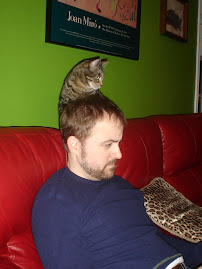
Currently, I am preparing for the release of the album of "Where Did The Horny Toad Go" - in fact, after writing this blog I am going to listen to the master I just received from Garrett Haines at Treelady Studios. As I mentioned, the project was recorded here at my home studio, known as Galloping Cat Studios (I love the name so I had to mention it. Even now I am hearing the sound of a cat galloping down our hallway).

I also have re-releases of some of my earlier albums that will see the light of day this year. They are remixed and remastered versions of two lo-fi EP's I did around 1999 and 2000. I am very excited to put them out there in a better form than I did back then.

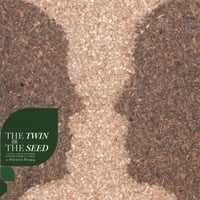
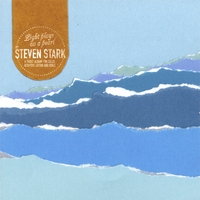
I also hope to begin recording another project this year - the third in a series of albums in the vein I call "limited music" - songs/pieces recorded in the popular idiom drawing inspiration from classical composition in the sense that they are limited to a specific instrumentation. My chosen "limitation" is restricting the recordings to cello, acoustic guitar and voice. The first two records in the series are "Light Plays On A Pearl" (2006), also recorded without any effects, and "The Twin or The Seed" (2007).

And of course there is "normal" work to do. Teaching lessons, playing gigs, etc.

I do have plans to write more this year. My goal is to keep posts reasonably brief and somewhat often - perhaps breaking different ideas up into series of posts. One of my two main goals is to write about my novice understanding of meditation and hopefully to get a few readers to participate with me in attempting meditation more often and sharing our insights. One of my primary reasons for this is to simply get myself meditating regularly again. In my brief, "amateur"experiences, the effects on my life have been profound.

My other goal is to present a series called "Theology From The Plain" where I explore my framework for seeing "that which is". It will not be super organized, but once again, my attempts will hopefully be reasonably brief and often. I hope this will help keep things pleasant and somewhat interesting for any readers who are generous enough with their time to stop by this site and explore with me.

That's what blogs are for right? We explore as readers and writers - in posts, in comments and in our personal thoughts.

I wish you the very best in all of your endeavors this year!


ADDITION - Thanks to Burk for reminding me that I also want to start posting more about music!